Showing posts with label dandelion. Show all posts

Saturday, March 3, 2012

Dennis Merritt Jones: Reverence Thyself First: Where the Sacred Journey Begins

Ever so often I read an article that is profound and makes me sit up and evaluate how I look at things and treat other people that do not share my values. This article by Dennis Merritt Jones -- speaks to God's creation and divine presence in all things including even the lowliest weeds.


Last summer, I would go on long walks and would pick marigolds and other field flowers such as dandelion flowers. Most people consider dandelion to be a weed but the flowers and leaves are edible and also have medicinal properties. The interesting thing about the dandelion flower is that it has a vibrant yellow color. The flower would close at night into a tight bud and then open in the morning.


I also found out from the owner of Herban Wellness, a local wellness shop located in Kirkland, WA, that dandelion root is used for cleansing. Dandelion has been used for its medicinal and anti-inflamatory properties -- for treating infections, bladder infections, and as a diuretic for liver cleansing.


So next time you see a weed, take a second look at it and remember the awesomeness of all of God's creations and his divine presence in all things!


Dennis Merritt Jones: Reverence Thyself First: Where the Sacred Journey Begins


Disclaimer: The statements regarding the nutritional and medicinal properties of the various foods have not been evaluated by the Food and Drug Administration. These items are not intended to diagnose, treat, cure, or prevent any disease. Please consult your own physician for guidance regarding your health and nutrition.

Sunday, November 13, 2011

8 Foods That Lower Blood Pressure | Caring.com

I am one of the lucky people that has an excessively low blood pressure, perhaps, because I drink a lot of green tea which has been found to lower the risk of developing heart disease! For people that have a history of high blood pressure and those that want to maintain good cardiovascular health, this article from Caring.com can help you to incorporate in your diet foods that can lower blood pressure.

8 Foods That Lower Blood Pressure


Last updated: October 13, 2011
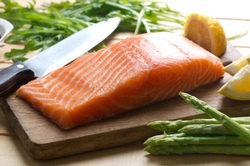
Salmon on cutting board
Plant-based diets and diets high in fruits and vegetables are strongly associated with lower blood pressure -- so much so that the National Institutes of Health (NIH) officially recommends adopting healthy eating practices as one of the primary actions to take to prevent or lower high blood pressure and hypertension.
DASH, which stands for "Dietary Approaches to Stop Hypertension," is the eating plan recommended by the NIH. It features foods that are low in saturated fat, total fat, and cholesterol, with a particular focus on fruits, vegetables, and low-fat dairy. The eight foods on this list are DASH-approved. Not only are they packed with nutrients that support overall health, but they also help lower blood pressure. Here's how:
1. Celery
Mark Houston, a physician and medical director of the Hypertension Institute of Nashville at Saint Thomas Hospital, recommends celery to patients as a natural remedy for lowering blood pressure. This recommendation isn't anything new: Doctors of Traditional Chinese Medicine (TCM) have been prescribing celery or celery root to patients with high blood pressure for more than a century. Studies have shown benefit in animals as well as humans.

How it works: Celery contains phytochemicals known as phthalides, which relax the muscle tissue in the artery walls, enabling increased blood flow and, in turn, lowering blood pressure.

How much: Research suggests that eating four stalks of celery per day may be helpful in lowering blood pressure. For a boost of protein, add a tablespoon of unsalted peanut butter or almond butter; both are high in monounsaturated fat (the heart-healthy kind).
2. Cold-water fish
Cold-water fish are rich in anti-inflammatory omega-3 fats, which are famous for their cardiovascular benefits. In particular, omega-3s lower blood pressure and reduce the risk of heart attack and stroke. Wild (not farmed) salmon, tuna, mackerel, cod, trout, halibut, herring, and sardines are among the best sources.

How it works: Omega-3 fatty acids are essential fatty acids: The human body can't make them, so we need to get them from the food we eat. Omega-3s act as a natural blood thinner, making it easier for your heart to pump blood around your body. Less viscous (thick) blood is also less likely to form clots in veins and arteries.

How much: According to the joint guidelines from the FDA and the EPA, two six-ounce servings per week of most cold-water fish is a safe amount for most people, including pregnant women and nursing mothers, to reap the health benefits with minimal risk from exposure to toxins. If you bruise easily, have a bleeding disorder, or take blood-thinning medication, talk to your doctor about potential complications.
3. Broccoli
Nutritionally speaking, broccoli is a red-carpet regular, connecting the worlds of scientific research and natural health. This cruciferous veggie is hailed as a super-food because of its powerful antioxidant and anti-inflammatory properties. And when it comes lowering blood pressure, broccoli sells itself.

How it works: Broccoli is a potent package of fiber, potassium, calcium, magnesium, and vitamin C, all nutrients that help lower blood pressure. One cup of steamed broccoli provides more than 200 percent of the vitamin C you need each day. Researchers aren't sure how, exactly, vitamin C helps. Theories range from the vitamin promoting the excretion of lead to calming the sympathetic nervous system to protecting nitric oxide, a molecule that relaxes blood vessels, thereby increasing blood flow. But the results are the same: Antioxidant vitamin C helps normalize blood pressure.

How much: For the myriad health benefits you can reap from regular consumption of broccoli, most people would do well to eat at least one serving a day. For variety, eat it raw with salsa or hummus, or steamed with olive oil and lemon. If you have a juicer, run the stalks and leaves through for a spicy green sipper.
4. Dandelion
For more than a century, dandelion has been used as a cure-all for countless conditions and ailments in cultures around the world, particularly in its native Asia and Europe. The entire plant is edible, from leaves to roots. And in addition to lowering blood pressure, it's good for the liver, eyes, and skin.

How it works: A natural diuretic, dandelion helps reduce blood pressure by releasing excess sodium without the loss of potassium (as occurs with some over-the-counter diuretics). This is doubly important because excess sodium raises blood pressure by constricting blood vessels, while potassium helps regulate it. Dandelion is also loaded with magnesium, which dissolves blood clots and stimulates the production of nitric oxide, helping to relax and dilate blood vessels for better blood flow.

How much: Eat fresh dandelion greens in a salad, sauté dandelion roots in a stir-fry, or drink dried dandelion in a tea. Incorporate dandelion into your diet as often as you can; it's really good for you, and in any form you find it (except on your lawn), chances are that it's organic -- grown without harmful pesticides or herbicides.

Disclaimer: Please discuss your health with your doctor for proper guidance on lowering your blood pressure.

Source: 8 Foods That Lower Blood Pressure | Caring.com